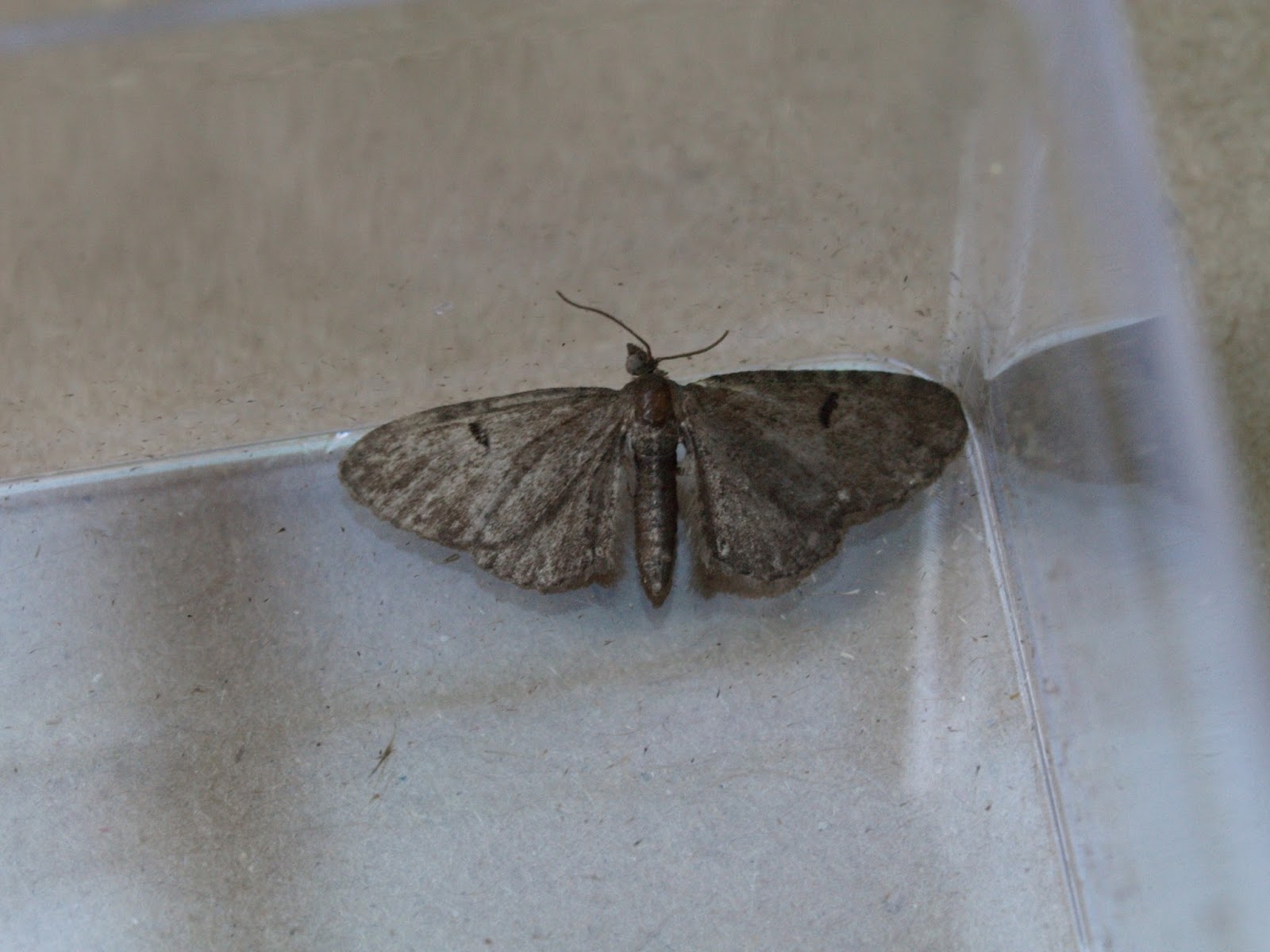
UPDATE: Mike and I have done some detective work on this one and, sadly, we have to report that although this moth is the lovely Pyrausta cingulata, it isn't from Berkshire. Due to a particularly unfortunate and complicated series of unlikely photo filing operations, the photo got muddled up. It was actually taken in Gait Barrows, on one of the UTB away trips to the Lake District.
I'll leave the original post below as a cautionary tale: no matter how careful we are to photograph, identify and record things, it's human nature that mistakes can still creep in. None of which invalidates the final statement below, that Lardon Chase is a fantastic place to visit and look for moths!
Original post:
This is from 2014, but it's exciting news that I've only just picked up on. On 5 August 2014 Mike Wilkins photographed this moth at
Lardon Chase in Berkshire, and correctly identified it as the Silver-barred Sable,
Pyrausta cingulata.
There are no previous records for this species on the county moth database, and it is not listed in Brian Baker's "The butterflies and moths of Berkshire" (1994). However, a check on the
National Biodiversity Network Gateway showed a dot on the map for Berkshire, which turns out to be based on specimens in the Tullie House Museum, Carlisle, collected by
W.H. Harwood between 1890 and 1930. These are labelled as having been caught at "Newbury", but Harwood collected widely across the country and there are places called "Newbury" in other counties, so we can't be sure that his specimens really came from Berkshire.
So Mike's record is the first properly documented record for Berkshire, and even if Harwood's records can be confirmed Mike's will still be the first for about 100 years!
Which raises the question of what this moth is doing at Lardon Chase.
Pyrausta cingulata is reasonably large (for a micro-moth) and is distinctive and day-flying, and Lardon Chase is a well-recorded site, so why hasn't it been seen before? Has it just been overlooked, or has it recently colonised? If the latter, where has it come from (there are no Bucks or Oxon records, I'm not aware of any recent records in other neighbouring counties, and it's not known as a migrant)?
I'd love to know if it is resident at Lardon Chase, so if you are visiting that site please look out for it. It flies in two broods, from the end of May to June and from July to early September, and its larvae feed on Wild Thyme.
Lardon Chase (National Trust) is also the only currently known Berkshire site for the pretty
Powdered Grass-veneer, Thisanotia chrysonuchella - definitely worth a visit! I'm told there are some nice butterflies as well for those who like that sort of thing :)