

A Blog for moth recorders in Bucks, Berks and Oxon
Monday, 31 March 2014
Double Striped Pug?
Good night last night, 1 Early grey, 14 Small Quaker, 17 Common Quaker, 7 Clouded Drab, 1 Twin Spot Quaker, 9 Hebrew Character, 1 Angle Shades,, 1 Early Thorn and two pugs.Unfortunately the decent specimen (the other was very worn) flew off before I could pot and measure it. Mark Griffiths, Garsington, Oxford.

Busy in Thrupp


The tally overall was 92 moths plus two caddis flies: 38 Common Quaker, 18 Clouded Drab, 12 Hebrew Character, 12 Small Quaker, four Early Grey, two March Moth, two Oak Beauty, two Brindled Pug, one Early Thorn, one Pine Beauty, one Red Chestnut, one Emmelina monodactyla and one small and grubby micro which I am working on. Martin Wainwright.
Sunday, 30 March 2014
Seer Green
Looking at other's recent posts, it certainly seems that Streamers have emerged, and that includes in my garden last night. Also new for the garden year list was Diurnea fagella and a brace of Double-striped Pugs in a total of 12 moths of 9 species.
 Dave Morris
Warburg
 |
| White-marked, Warburg NR, 29/03/2014 |
Micros at the kitchen window
The warmer evenings are certainly bringing the moths out. I had 4 different micros come to rest on my kitchen window in Cookham last night - Emmelina monodactyla, Alucita hexadactyla, Agonopterix heracliana (earlier comments re this species duly noted) and finally what I believe to be Ypsolopha mucronella. This is a new moth for me, so I include 2 photos, and would appreciate it if someone could confirm my id.


Steve Trigg
Steve Trigg
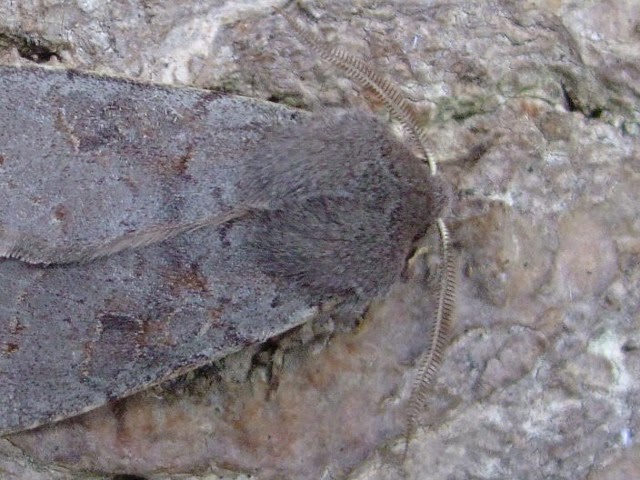
Lead coloured drab
I can show details of Lead coloured drab in these pictures of one i got in Finemere last night, if this is any help, Mark. Dave Maunder

I.d. needed if possible, please!
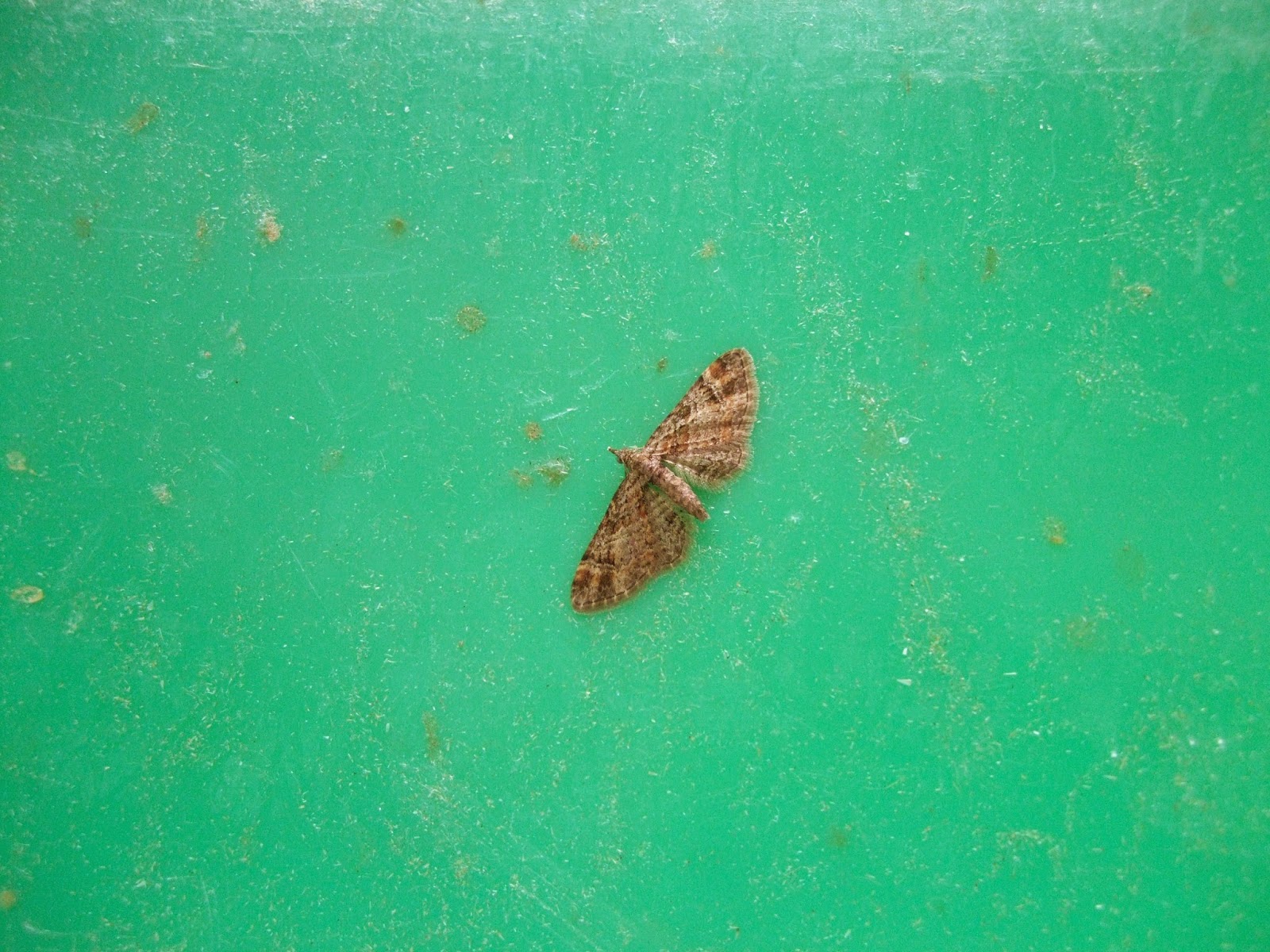
Is the micro Caloptilia stigmatella, found in my garden trap this morning? Any ideas welcome! Also i think the pug is Double striped, but not sure. Thanks! Dave Maunder

Holtspur Bottom
A couple of MV lights run last night at our own Holtspur Bottom reserve (near Beaconsfield, Bucks) produced just over 180 moths of 23 species in the allotted three hours, of which the highlight was undoubtedly what seems to be the first ever March record for Scorched Carpet in Bucks. The only other species of note were Agonopterix purpurea, Agonopterix alstromeriana and my first sightings of Streamer, Purple Thorn, Angle Shades and Nut-tree Tussock this season. It was also nice to see Dotted Chestnut putting in appearances at both traps. Back home at Westcott the highlight in the overnight garden actinic trap was not one Herald but three of them! Dave Wilton
 |
| Scorched Carpet at Holtspur Bottom, Bucks 29th March |
 |
| Herald at Westcott, Bucks 29th March |
Another Clouded Drab?
Largest catch so far this year for my 40w Actinic Heath trap, I definitely had something new this morning, looked vaguely like a carpet but it was off before I could get a proper look. 21 Common Quaker, 2 Small Quaker, 4 Early Greys, 10 Hebrew Characters, 6 or 7 Clouded Drabs.
There was one I thought was different but having looked at it again I think it's another Clouded Drab but I'd appreciate a confirmation.
Still wondering about the one that got away!

Mark Griffiths, Garsington, Oxford
There was one I thought was different but having looked at it again I think it's another Clouded Drab but I'd appreciate a confirmation.
Still wondering about the one that got away!
Mark Griffiths, Garsington, Oxford
Saturday, 29 March 2014
More moths from Finemere
I spent a couple of hours with my actinic skinner at the turning circle in Finemere woods tonight with my daughter Rebecca, and had a reasonable catch, which included :- Frosted green (1), Lead coloured drab (1), Small quaker (35), Common quaker (20), Hebrew character (1), Chestnut moth (5), Early thorn (3), Oak beauty (1), Small brindled beauty (3), Shoulder stripe (1), March moth (5), Brindled pug (4), Engrailed moth (2), Tortricodes alternella (1), and Diurnea fagella (4). Rebecca's first time out with me mothing, and she really enjoyed it! Dave Maunder

Some IDs please
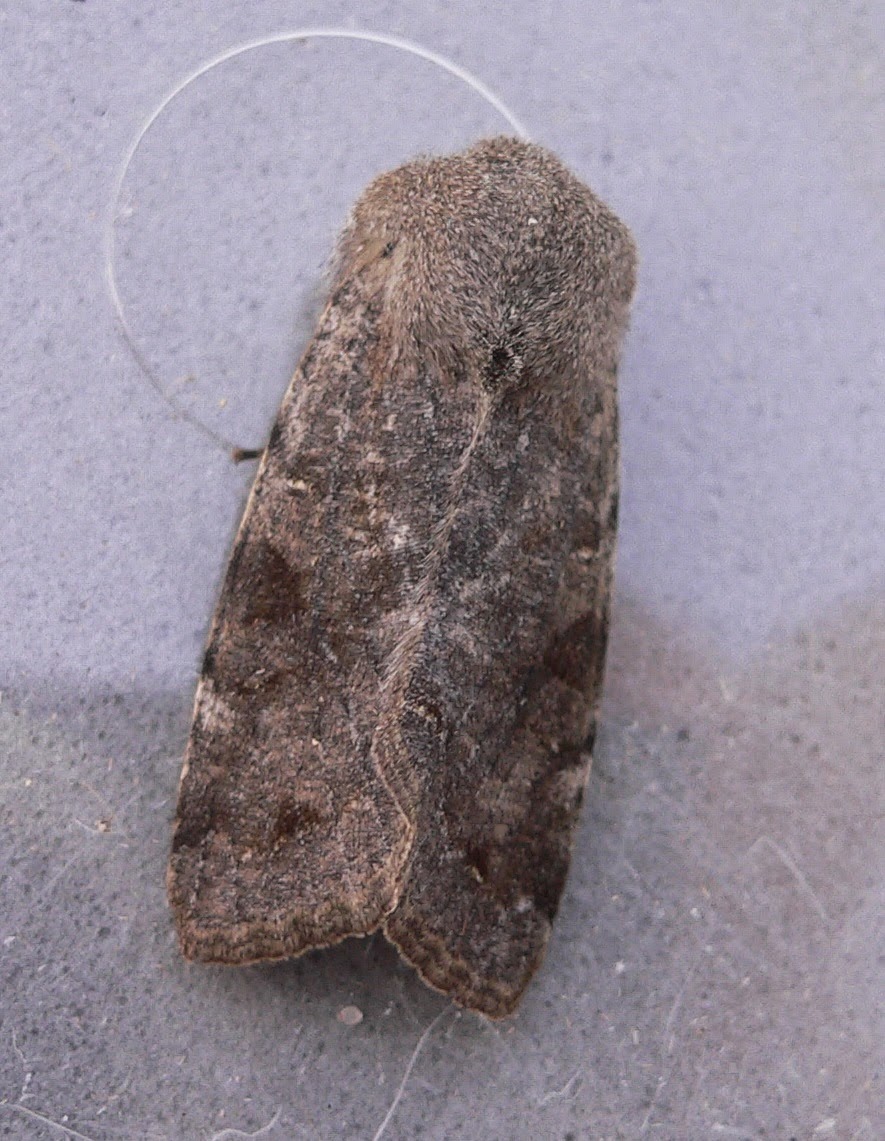
Ran the trap last night for the first time for a week or so. I think I had an Emmelina monodactyla plus possibly two Small Quakers - and just maybe a lead coloured drab. I've attached pictures of these three (two pics of the Drab in different light). Plus 4 Hebrew Characters, 1 Early Grey, 6 Common Quakers and 3 or 4 Clouded Drabs. Mark Griffiths, Garsington, Oxford



Better GMS
At last, a decent catch in my Seer Green garden (OK 8 moths, but it feels so good!!!).
1 x Small Quaker (NFY)
1 x Common Quaker
2 x Hebrew Character
1 x Brindled Pug (NFY)
1 x March Moth (NFY) and two months later than my first last season...
1 x Emmelina monodactyla (NFY)
1 x Shoulder Stripe (NFY):

Dave Morris
1 x Small Quaker (NFY)
1 x Common Quaker
2 x Hebrew Character
1 x Brindled Pug (NFY)
1 x March Moth (NFY) and two months later than my first last season...
1 x Emmelina monodactyla (NFY)
1 x Shoulder Stripe (NFY):
Dave Morris
Friday, 28 March 2014
Micro Moth Distribution Maps
For those of you that wonder about micro-moth distribution maps, John Langmaid and Mark Young's maps are slowly being digitized. Although we use our beloved County Recorders to ask about Upper Thames County Firsts, this will help seeing the overall status of a species, or if you find an unusual one when you go abroad to strange foreign places like Northants. The pdf's are the original paper maps and then you will see some have been digitised too. This process is on-going as and when funds allow.
http://www.mothscount.org/text/108/micro_moth_distribution_maps.html
Peter Hall
http://www.mothscount.org/text/108/micro_moth_distribution_maps.html
Peter Hall
Sunday, 23 March 2014
Not so drab Drabs!
Thought i'd post a photo to show differences between Clouded drab and Lead coloured drab, both trapped in Finemere woods last Sunday. Dave Maunder

Puss moth pupae
I was checking my overwintering pupae this afternoon, and thought people might like to see the size difference between male and female Puss moth pupae; you can tell the sexes from checking the antennae cases, which are broader in the male to house the larger plumed antennae; also the female has a plumper body, presumably to house the eggs she has stored inside. Dave Maunder

'Twin-spotted' Quaker
Following an exchange on an earlier blog describing the annoying habit of Clouded Drab to sometimes possess dark almost twin-spots and Twin-spotted Quaker to belie it's name by almost lacking them, I thought I'd attach a photo of an individual of the latter species displaying exactly that character. Not the best image and the pot I kept it overnight contained moisture it appears and has darkened one wing tip, but you can just make out the very faint twin-spots if you squint hard enough :). Marc Botham, Benson


Saturday, 22 March 2014
Light and shade


Friday, 21 March 2014
Tawny Pinion
Tawny Pinion at MV light in garden last night. First garden record and actually first ever record for me as this has been very much a bogey species. In fact I was ambling round my trap last night in the sodden grass at about 11pm trying to pick up the wind scattered Hebrew Characters and Common Quakers and grumbling to myself about how I was never going to see a Tawny Pinion. Having checked the contents of the trap that point seemed once again proven, but as I started grumpily heading back to the house I noticed a pinion-like moth clinging to some grass. I was pessimistic that it was going to be a Pale Pinion, but finally a Tawny. Seems like these two species are having a good season so far. Happy trapping. Marc Botham, Benson

Thursday, 20 March 2014
Melanic Brindled Pug?
The trap in my Cookham garden last night yielded 10 Common Quaker, 7 Hebrew Character, 6 Early Grey, 5 Clouded Drab and singles of Small Quaker, Diurnea fagella and a pug. While it looks nothing like Adam's picture in the earlier post, I think it is a Brindled Pug but the dark form. But a second opinion would be very welcome. Here is a photo -

Steve Trigg
Steve Trigg
Wednesday, 19 March 2014
Getting Started for the Year
I've finally got round to getting the trap out for the year and have the first few moths in my central Oxford garden to show for my efforts. So far it's just the usual spring moths with Hebrew Character dominating plus Common Quaker, Clouded Drab and Early Grey. I also had my first Pug of the year with a Brindled Pug on my garden shed.
Adam Hartley
Adam Hartley
 |
| Brindled Pug (I think - please correct me if I'm wrong) |
Re: Presumed Pale Pinion
I'm pleased to say that I belatedly rejoined the Pinion club last night with my first sighting of one since 2010 here at Westcott, Bucks. The differences between Pale Pinion and Tawny Pinion are laid out quite clearly in the Waring, Townsend & Lewington field guide. I had a Pale last night, whereas Steve Goddard (see his earlier post) had a Tawny the night before. Photos of each appear below, and I've highlighted the diagnostics for Tawny on Steve's picture (a black bar from the forewing outer edge running parallel to the leading edge; a dark central thoracic crest). Dave Wilton
 |
| Pale Pinion, Westcott, Bucks 18 March |
 |
| Tawny Pinion, Wolvercote, Oxon 17 March |
Ypsolopha mucronella
New moth for my garden last night:Ypsolopha mucronella. Otherwise apart from a really smart Dotted Chestnut everything as normal with Common Quaker and Hebrew Character dominating the trap as expected. Marc Botham, Benson
Tuesday, 18 March 2014
Presumed Pale Pinion
Not a bad couple of nights, though the range of species isn't that spectacular - still, the night of the 17th brought nearly 30 individuals, including the one pictured here:
I'm assuming Pale Pinion, but if anyone thinks it might be a Tawny Pinion, we'd be glad to hear it! I was also momentarily excited to find the moth below in our trap, before realising that Diurnea fagella has a dark form... Steve and Xander Goddard.
 |
| Presumed Pale Pinion, 17.3.14 |
I'm assuming Pale Pinion, but if anyone thinks it might be a Tawny Pinion, we'd be glad to hear it! I was also momentarily excited to find the moth below in our trap, before realising that Diurnea fagella has a dark form... Steve and Xander Goddard.
 |
| Diurnea fagella, 16.3.14 |
ID please
best night so far this year, 3 Early Grey, 1 Twin Spot Quaker, 1 Clouded Drab, 3 Common Quaker, 3 Hebrew Character, and one unknown sitting on the trap. I'd like an ID for that please. Mark Griffiths, Garsington, Oxford

Monday, 17 March 2014
Another micro ID plea

Here are the two micros I mentioned in my last bulletin from the Robinson trap at Thrupp, Oxon. I hope I'm right in nailing the first - one of three in the eggboxes - as Agonopterix heracliana (many thanks to Darren Seaman and Steve & Xander Goddard for their pics of Ah in recent posts).

Last night also saw a lovely Oak Beauty, a slightly more worn Brindled Beauty, an Early Grey, a March moth and the usual chorus of Quakers and Drabs. Martin Wainwright
In the greenhouse - ID please
Nothing much in the trap past few days but I found this little fellow in my greenhouse, I'd appreciate an ID. Mark Griffiths, Garsington, Oxford

Drabs and Quakers
After seeing Martins Drabs and Quakers i thought i'd put this photo up of a Clouded Drab that looks very similar to Martins Twin-spotted Quaker, Just too add confusion

Not quite two spots but in the same place
Darren Seaman
Dots and drabs

Sorry this isn't a moving map - I much admire them - but I've just had a lesson in not ID-ing too hastily. I thought I had three Twin-spotted Quakers in my Robinson Trap at Thrupp, Oxon, on Saturday night. It was only when I was tapping the moths out of the eggboxes into the safe (I hope) gloom below shrubs that I had a second look at the one above and thought it was something different or at least variable.
It is. A Lead-coloured Drab according to Ben Sale of Essex Moths who is an invaluable monitor of my guesses on my own moths blog. Here below is one of the Twin-spotteds, very handsome and I'd imagine freshly hatched. I'm now puzzling over a pair of micros and will probably be back soon... Martin Wainwright

Sunday, 16 March 2014
Another moving map
I promise I won't keep doing this, but I couldn't resist having another go at an animated map. This one is a bit more meaningful I think: its shows how Least Carpet has colonised Berkshire since it was first discovered in the county in 1996 (found in Maidenhead by Martin Albertini). Unlike the previous Pale Pinion map, which showed records for one year at a time, this map shows all the records as they accumulated from 1996 to 2012. We now have over 1,000 records for the county - nice to see a moth doing well!

Martin Harvey
Martin Harvey
Growing numbers; and a couple of unknowns
We had one species - Common Quaker - break in to double figures last night (eleven of them), and a couple of new species for the year (Early Grey and Diurnea fagella). However, we also had a couple of individuals I'm not at all sure about, although I have a nasty feeling they'll turn out to be pretty obvious - can anybody help us with them? The first, judging by size, is probably a macro - though I'm not even sure of that - and the second clearly a micro, I think some sort of crambid; all suggestions for species gratefully received (I do have a few other photos of them, but I don't think they'd help much). Steve and Xander Goddard.
 |
| Unknown, 15/3/14 |
 |
Unknown micro, 15/3/14 |
Micros ID
Ive had 2 micros in the last few nights, i think I'm right with the first one being Ypsolopha mucronella but please confirm, 2 photos added.


The other one is possibly Agonopterix heracliana but again confirmation is sought
These were caught in my 20W actinic trap in Milton Keynes, Bucks
Darren Seaman
Common Footman larva
Last Monday (10th March) Helen Hyre found this Common Footman caterpillar crawling along her kitchen windowsill on the outskirts of Aylesbury, Bucks.
 |
| Common Footman larva |
Pale Pinion year by year
Several people have reported Pale Pinion moths over the last few weeks (e.g. this one from Steve Goddard) I thought I'd see if there was any pattern to its appearances in Berkshire over the years. The numbers do go up and down a bit, but the distribution has remained scattered widely over the county. So I don't think this proves very much, but it was fun to do!:

Martin Harvey
Martin Harvey
Saturday, 15 March 2014
Tiny caller at Thrupp

At all events, it makes a pleasant change from the worthy but dull procession of Common Quakers and Clouded Drabs which have been holding nonconformist meetings in my eggboxes since I last posted, albeit much fewer in number during recent cold and foggy nights.
Martin Wainwright, Thrupp, Oxon.
Subscribe to:
Posts (Atom)