Friday, 8 July 2022

Sorting out Eucosma

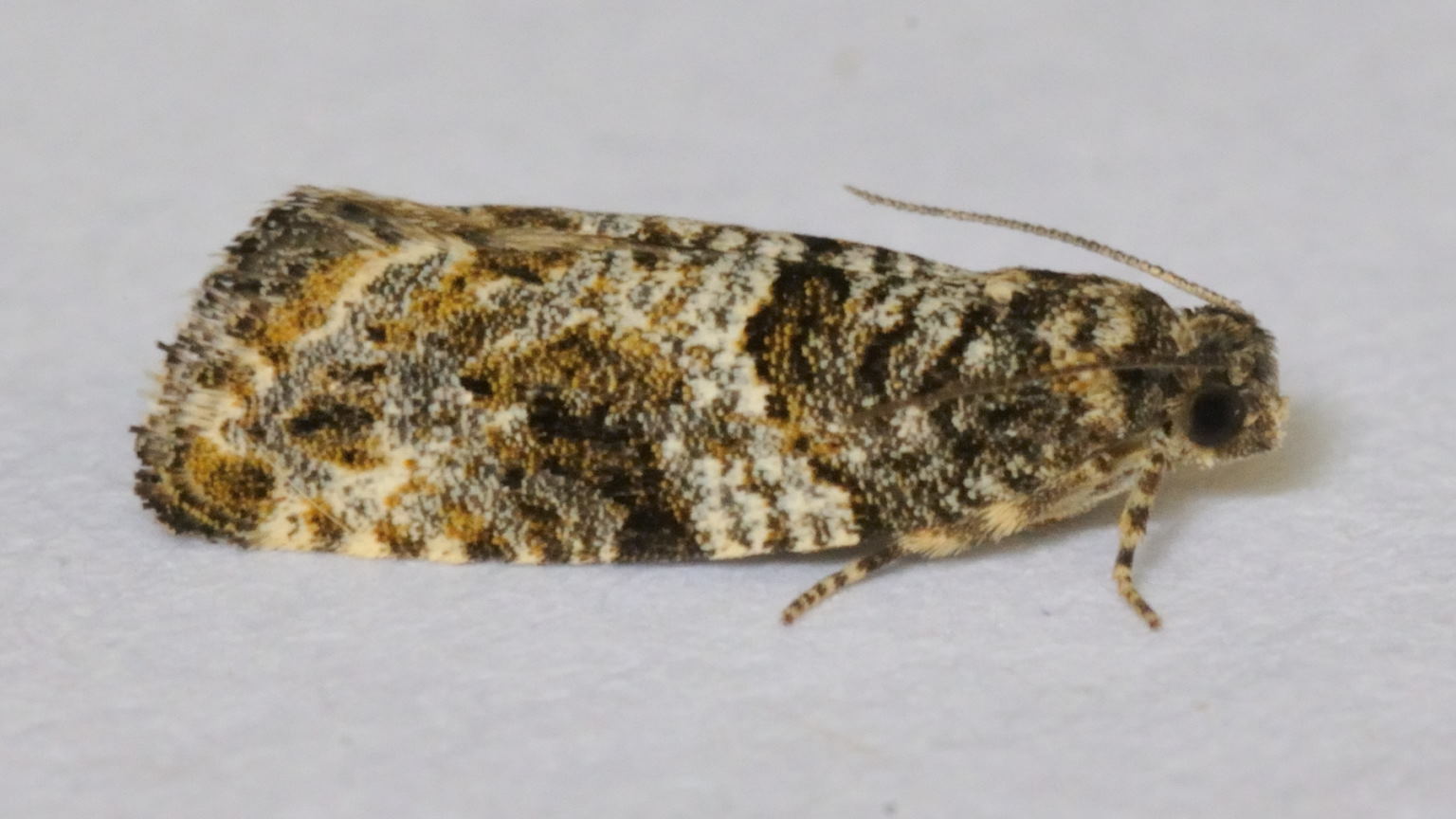
 Having fun with Eucosma at the moment (mostly E.cana), but these two specimens I think are different.

The first I have currently assigned E.conterminana, whilst the second, to me, looks like it should be E.hohenwartiana, or does it need gen det to be sure?


id help please 2 macros and a micro

 I've been struggling to identify these 3 from my trap in the last couple of weeks.  The two macros are so distinctive that I feel sure I should have been able to find them but I've failed.  The micro I think may be a gracillariidae - nearest I've got is Calybites phasianipennella which I doubt is correct.  So I'd appreciate help please from you patient folk when you have a moment - thank you!


Vapourer moth pupae - info please

 Hi there,

Does anyone have experience of how long a Vapourer typically spends in its pupa. I want mine to emerge before my holiday in two weeks time! It spun up three days ago. Thanks.

Thursday, 7 July 2022

Scallop Shell

 Hi there,

Not a moth I've ever had in the trap before, so good to see. Pretty sure this is Scallop Shell - hope I'm right!!

David


A small backlog

In anticipation of some large catches in the forecast heatwave, I'm scrambling a bit to catch up on a backlog of records for my garden in Wolvercote, Oxfordshire, dating back a week or two. I've a few individuals which I've not managed to pin down despite poring over the books for some time, and would be grateful for any suggestions.

This was from 9th June, and looks vaguely like Cabbage Moth, Dusky Brocade, etc., but not quite right for any of them. Around 15mm long.

Unknown macro, 9th June 2022

This on 21st June is perhaps too faded and nondescript to be identifiable - it got away before I could measure it at all.

Unknown macro, 21st June 2022

And this, from 17th June, is about 5mm long, and looks like some sort of Mompha - but doesn't quite tick the boxes for any of them.

Possible Mompha, 17th June 2022

All suggestions gratefully received!

Steve Goddard

And another...

 ...Sallow Clearwing, this time in my garden.

I put the SAL lure out early this morning near a large mature Crack Willow Salix fragilis; however the moth didn't turn up until some time between 14:30 and 16:00 this afternoon. 
Phil T


Small Marbled

I had somehow failed to see Dave's post of 29th June about finding a Small Marbled; I probably missed it as I had only just got back from a couple of weeks abroad and had quite a lot of catching up to do.  Anyhow, that's my flimsy excuse for the following slightly-embarrassing tale.

I had a handful of "micros" from my trap on Tuesday night which I had kept back to photograph and to identify from the photos.  The last one was clearly (!) a Tortrix, so I photographed it from the side and went looking unsuccessfully amongst the likes of Aethes species until after quite a while I noticed that not only were the cross-bands wrong, but the wings were too broad and the palps were obviously and completely wrong for a Tortrix.  Time to slap my forehead and then to take a top-down photograph as well.

I couldn't think of any families amongst the micros with the combination of upward-curving palps and strong reddish-brown central cross-band.  In some vague way, the slender, curved outer cross-band reminded me of the Nola family amongst the macros, and they are small enough (this individual has a forewing length of 7mm) and roughly the right shape, but the colour and palps are wrong.  So I glanced through the rest of the field guide to the macros and found Small Marbled amongst the Erebidae.

The book hits the nail on the head with its first sentence: "Very small and easily overlooked amongst the Tortricoidea".

Small Marbled
Newton Longville, 5th July 2022

I'm happy to have found this nice migrant and pleased that I eventually got to the right answer, even if it took me a while.  Next time, I'll try to look at the whole moth before jumping to conclusions.

Tim Arnold
Newton Longville, Bucks


Lesser-spotted Pinion

Can someone confirm this? I'm thinking Lesser-spotted Pinion rather than Lunar-Spotted although I have had both in the past.


Mark Griffiths, Garsington, Oxford.

Light Crimson Underwing

Well I wasn't expecting this at Ali's Pond LNR in Sonning last night! A lifer and another Holy Grail picked off following the spate of Clifden Nonpareils over the last few years. Not sure whether it is a migrant or whether they breed in the Thames Valley. Can anyone enlighten me?


Wednesday, 6 July 2022

Micro to ID

 This rather snazzy micro has defied identification. Any help appreciated.


Dave Ferguson, Beaconsfield


Don't forget the leaf-mines...

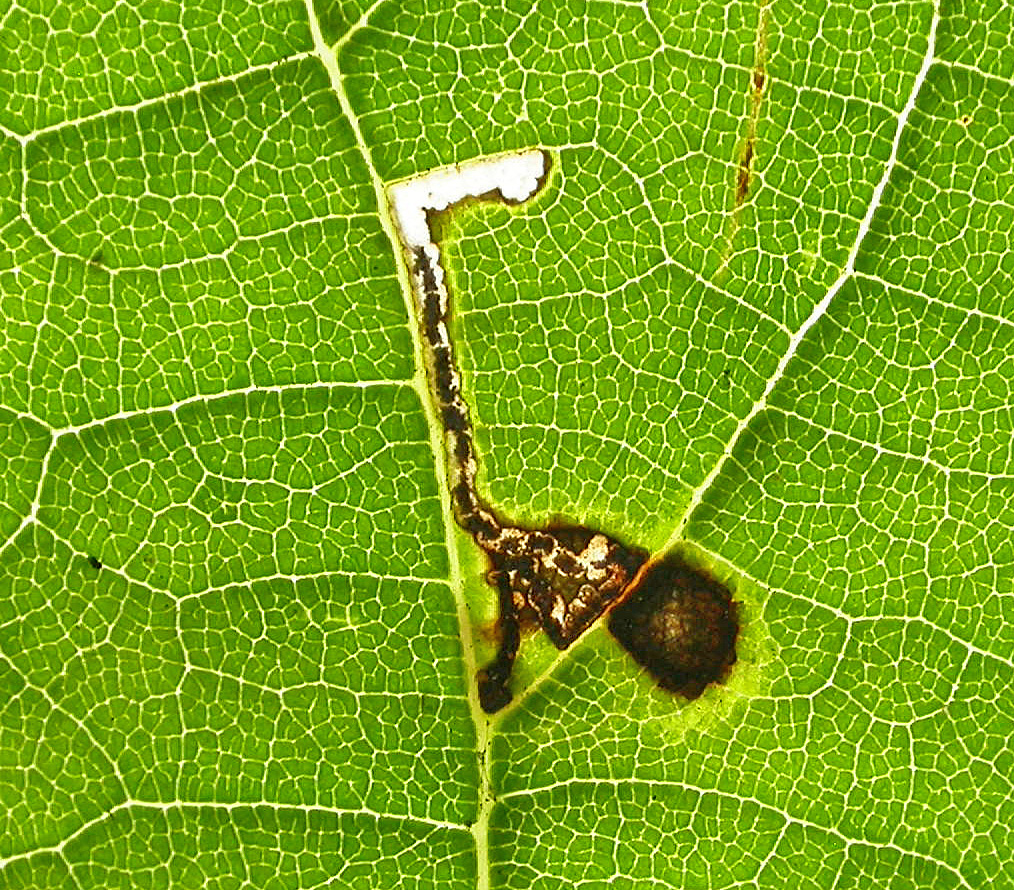
I had a quick look at our garden hawthorn this afternoon in order to track down a mine of Stigmella crataegella.  One was duly discovered although unfortunately the larva had already vacated it to pupate.  Still, it was a useful exercise because a find now can only be crataegella and there is no confusion with the identical mine (and green larva) of Stigmella oxyacanthella which feeds in the autumn.  Other mines found in the garden today included those of Phyllonorycter rajella (on alder), Bohemmania pulverosella, Phyllonorycter messaniella & Stigmella incognitella (all on apple), Phyllonorycter leucographella (on firethorn), Phyllonorycter corylifoliellaPhyllonorycter oxyacanthae (both on hawthorn), Phyllonorycter coryli & Phyllonorycter nicellii (both on hazel), Bucculatrix thoracella & Stigmella tiliae (both on lime), Stigmella aceris (on Norway Maple) and Lyonetia clerkella (on just about everything!).  

Stigmella crataegella on hawthorn, Westcott 6th July

Stigmella tiliae on lime, Westcott 6th July

Bucculatrix thoracella on lime, Westcott 6th July

Dave Wilton Westcott, Bucks   

Tuesday, 5 July 2022

Further Sallow Clearwing sightings

Seeing Dave's post yesterday about his Sallow Clearwings, I duly got the SAL lure out of the freezer. In the meantime, the LUN lure was placed in the garden about 1pm, and when I looked half an hour later there was an occupant in the trap - a Sallow Clearwing! I kept it potted up, and around 4pm I placed the SAL lure in the garden. Quite quickly, another 2 Sallow Clearwings arrived. So, Dave is correct - definitely a good time to find this moth.
Steve Trigg, Cookham

Lunar Hornet and Sallow Clearwing

I started trying for Lunar Hornet with the LUN lure in the last week of June, but it wasn’t until July 3 that one showed up, which was a couple of days earlier than I had one last year.


Having been successful, I switched to the SAL lure in the same place (by a mature willow), but so far without success.
Then this afternoon I took the lure to some local woodland, where I have been eyeing up the patches of sallow as potential clearwing stake-outs, and hung the lure upwind of the first patch I came to. Some 45 minutes later, after my butterfly transect, I returned to check the trap to find it contained a single Sallow Clearwing! Based on Dave’s comments about how skittish they are, I took several shots through the clear plastic of the lure as insurance before removing the top. It’s as well I did, because as soon as I opened it up, he was away!


                                            Sallow patch where clearwing found 


I then moved 100 m further to another patch, hung up the lure...and within 10 minutes a Sallow Clearwing was buzzing around the lure. I managed one or two poor photos before it left without entering the trap. So, it seemed as if every patch of sallows might hold clearwings, but two other patches yielded nothing.
However, it wasn’t until I got home and started editing the photos, that I noticed that the second individual had a very similar set of markings to the first one, in particular a break in the middle yellow band, on which basis I concluded that it was almost certainly the same individual that had followed me from the first patch!
Nevertheless I would be amazed if there were not others elsewhere in the wood given the number of good-looking sallow patches there are.
Since this was good mature oak woodland, I also deployed the VES lure, but, as seems to have been the case this year, it only attracted an Orange-tailed Clearwing.


Phil T

Monday, 4 July 2022

That'll do nicely, thanks!

I had a butterfly transect to do in local woodland today and, although there were only occasional glimpses of the sun, I decided it was worth taking the SAL pheromone lure with me for Sallow Clearwing Synanthedon flaviventris because the site was one of those which produced the species two years ago.  The lure was hung up inside a trap at a suitable spot and left for the 90 minutes it took me to complete the tedious job of counting getting on for 1,000 Meadow Browns and Ringlets.  When I got back to the trap there was, much as expected, nothing in it!  Having arrived back home at about 4.30pm I decided to hang the trap out in the garden rather than putting it away, not really expecting anything, so I was amazed to find that by 5pm it had attracted two male Sallow Clearwings.  Needless to say, this is a new species for the site and both are illustrated below.  They were very skittish and I was lucky to be able to grab any pictures at all.
          
Sallow Clearwing, Westcott 4th July

Sallow Clearwing, Westcott 4th July

I suppose I shouldn't really be surprised that they turned up here because I do get Lunar Hornet Moth which uses the same food-plant.  There is sallow (both Salix cinerea and Salix caprea) along our boundary fence and there is quite a large area of sallow secondary woodland on the adjacent Westcott Venture Park which is only the width of a couple of gardens away from us.  Now would seem to be an excellent time to try this lure if you have it.

Dave Wilton Westcott, Bucks

Sunday, 3 July 2022

Aggregates and other things

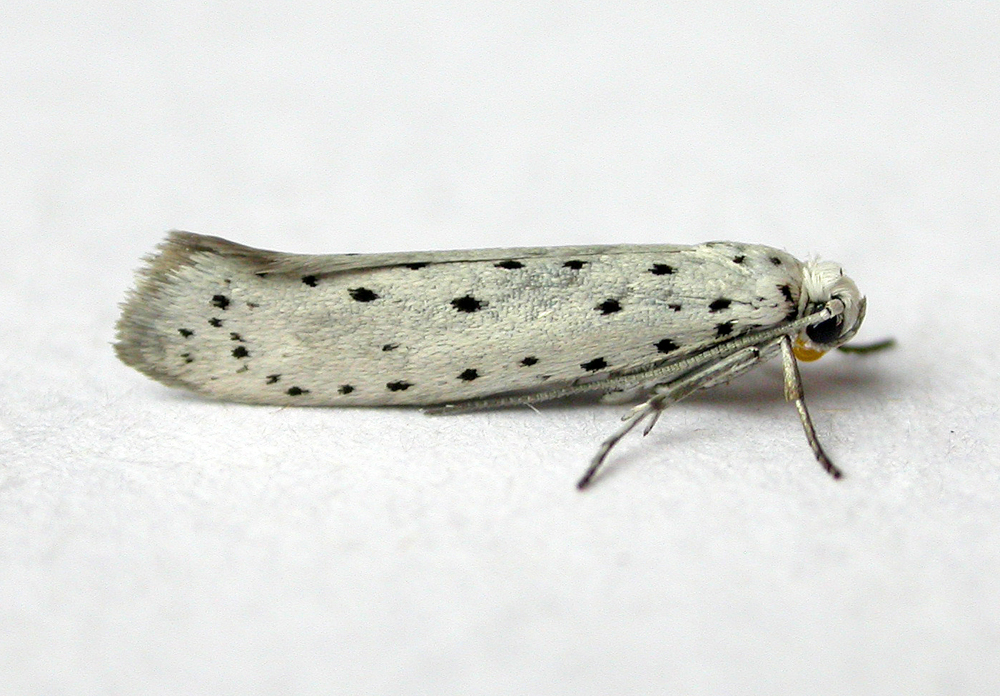
I'm sure newcomers to mothing will have got used to aggregating records for moths like the Cnephasia micros and the Oligia (Minor) macros which can't be told apart without reference to their genitalia.  I've had further species like that in the garden over the past couple of nights, including at least one of the three Ermine micro-moths which can't be separated on looks (Yponomeuta padella, Yponomeuta malinellus & Yponomeuta cagnagella) as well as Common/Lesser Common Rustic and the Ear species.

Yponomeuta species, Westcott 1st July

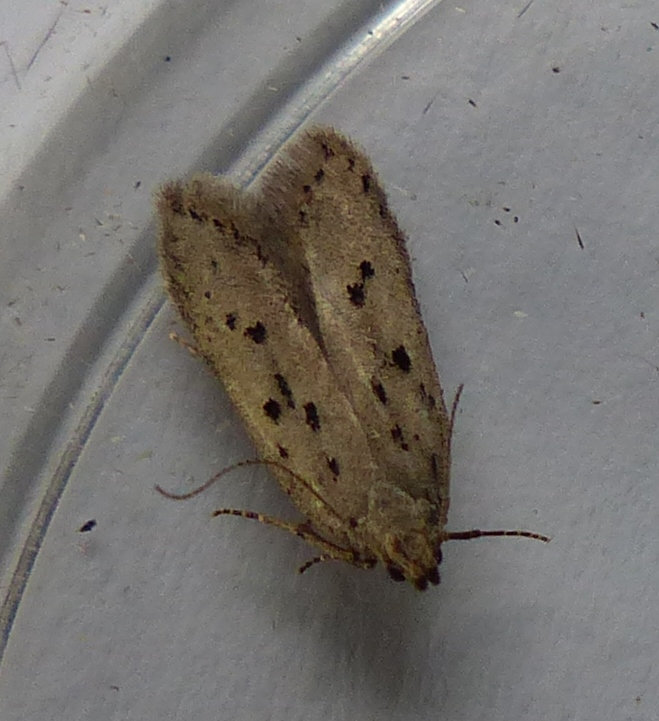
Common/Lesser Common Rustic, Westcott 1st July

Ear species, Westcott 2nd July

The three Yponomeuta moths feed on blackthorn/hawthorn (padella), apple (malinellus) and spindle (cagnagella) and the only safe way to get them to species is to have reared them from their larval webs on the correct food-plant (dissection of adults is of no help at all).  I have all three plants in the garden and I suspect I get all three species but the only larvae I've found here have been those of cagnagella on our spindle.  Common Rustic and Lesser Common Rustic can not safely be separated on looks so, for site records to species, one or two will need dissection.  The same is true of the Ears.  The only resident in our area is the fairly common Ear Moth but we are relatively close to populations of Saltern Ear along the Thames Estuary from which there are occasional wanderers.  Large Ear has also been recorded in our area, hence the need for dissection or else recording as an aggregate.

     In other news, I finally had luck with the pheromone lure for Lunar Hornet Moth this morning.  The lure was placed out in the garden inside a trap at 11.30am and within fifteen minutes had attracted the single male shown below.

Lunar Hornet Moth, Westcott 3rd July

Amongst last night's rather poor collection of moths in the garden traps was my first Drinker of the year, unusually a female.

Drinker, Westcott 2nd July

Finally, this morning I noticed the early stages of Lyonetia prunifoliella on blackthorn just down the road from our house.  I had an adult in the garden trap for the first time last September but this is the closest to home that I've found its mines.  The species apparently disappeared from the UK back in the early 1900s, but was noted again during 2007 in southern coastal counties and seems now to be spreading northwards quite rapidly so it should be possible to find it anywhere in our area.  Its mines are quite unlike anything else which uses blackthorn (this seems to be the only recorded food-plant in the UK although others are understood to be used in Europe) and more often than not they're in batches as on the stem below, each mine eventually taking over almost the entire leaf.  

Mines of Lyonetia prunifoliella, Westcott 3rd July

Dave Wilton Westcott, Bucks

Saturday, 2 July 2022

A couple of micros....

 ....trapped in Merton last night. I think the first is Athrips mouffetella, and the second could be Nematopogon metaxella on the basis of size and the dark spot on the wing? I found it very hard to photograph, so have include two versions.


L-album Wainscot?

I know trying to identify a moth from a photo of a worn individual can be a challenge too far, but I wondered if this worn wainscot that appeared in the garden trap last night was a good candidate for L-album Wainscot?
Steve Trigg, Cookham

Micro help

 Not being great with micros, I am slightly sticking my neck out here - Dioryctria simplicella? From my Wokingham, Berks. garden last night.

Thanks

Sean


Friday, 1 July 2022

Moths to check

Dave reported that he had more than 100 species on the night of the 29th.  I didn't manage that many, but I still ended up with about 89 species.  I haven't run a trap for about three weeks - mainly as a result of being abroad for a fortnight - which meant that about about half of these were new-for-the season.  Having so many moths with which to re-familiarise myself (and to photograph) meant it took me a long time to work my way through the catch.

I have a few to check, of which I think the first is probably a Small Wainscot rather than a Concolorous.  It lacks the central dark streak that I have seen with previous Small Wainscots, but the outer ends of the veins are dark and I can find no examples of Concolorous like that.  I have added a photo that shows just a tiny bit of its hindwings, just in case.  I am clumsy and have a slight tremor, so getting it to show its hindwings was a struggle and both the moth and the human were getting a little fractious, so a photo taken with the moth in a pot and its wings only very slightly open is the best I could do.


Version with grossly exaggerated contrast
to show kidney mark with dark corner

Next is what I think is a heavily-marked example of Oidaematophorus lithodactyla, the Dusky Plume.  The tibia of the mid-leg is thickened with scales as described in the field guide, but the brown banding above the joints on the hindleg is at best subtle.

Possible Oidaematophorus lithodactyla
Newton Longville, 29th June 2022

My last moth for checking is at the opposite end of the scale of marking.  I originally wrote down Grey Birch, then I dallied with Engrailed, but after looking at the photo, I think the posture and general shape better fits (female) Willow Beauty or Mottled Beauty.


Finally, I reviewed the photos for my previous session of 6th June which I hadn't had time to label, and realised that Gypsonoma oppressana was a nice catch.  It came from the trap which I set directly between two Lombardy-style Black Poplars, so I hope it's resident in the garden.
Gypsonoma oppressana
Newton Longville, 6th June 2022

Tim Arnold
Newton Longville, Bucks


A nice micro

At Grangelands, Bucks on 22nd June I had an example of the tiny all-white micro Opostega salaciella whose larvae are understood to feed on sheep's sorrel.  I've seen it at various sites in the south of the county and have also had it in the garden here on five occasions (most recently in 2018) where the food-plant would appear to be absent locally.  While trapping in Yardley Chase on 28th June I thought I had another but it didn't quite look right so was brought back home to check.  This one turned out to be a close relative, the even smaller (wing length 4mm) and far less common Pseudopostega crepusculella whose larval food-plant is not known for certain but may be water mint.  I've seen it two or three times previously, including in Homefield Wood near Marlow where I got several in July 2015.  Unlike salaciella which is just plain white, crepusculella actually has a few distinguishing markings, including an obvious black dot in the terminal cilia.  There are five previous records for Bucks but this one is the first from the north of the county.

Pseudopostega crepusculella, Yardley Chase 28th June

Dave Wilton Westcott, Bucks


Micro for ID please


I have been struggling with this for a couple of days, but can't seem to find anything. I Initially thought it was perhaps a worn Euzophera pinguis, but it is too small (7 mm FL), apart from anything else. I'm sure it will be obvious once I know!
Thanks
Phil T


Royal Mantle

 Had a great night trapping in my parents garden in Whitchurch on Thames on 29th June and was delighted to catch a Royal Mantle. What pretty little moth. I also caught my first ever Eyed Hawkmoth! I really thought I would never catch one as it has eluded me for many years.

Royal Mantle 

Eyed Hawkmoth 


Lorna Woolhouse, Checkendon, South Oxon